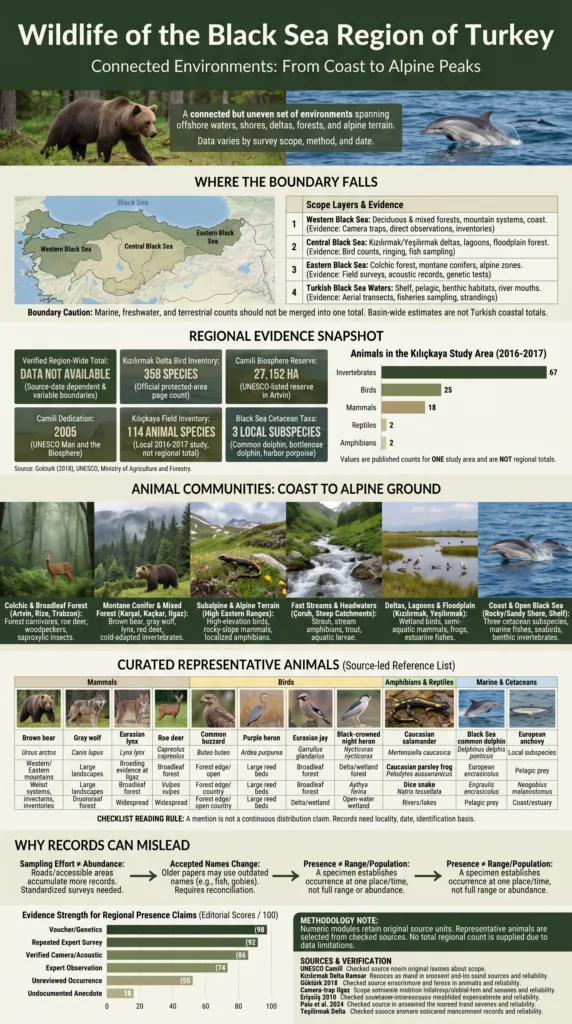
Wildlife of the Black Sea Region of Turkey
Wildlife in Turkey’s Black Sea region is organized by species, habitat, and regional occurrence across forests, mountains, wetlands, and coasts.
Wildlife of the Black Sea Region of Turkey Read More »
Wildlife in Turkey’s Black Sea region is organized by species, habitat, and regional occurrence across forests, mountains, wetlands, and coasts.
Wildlife of the Black Sea Region of Turkey Read More »
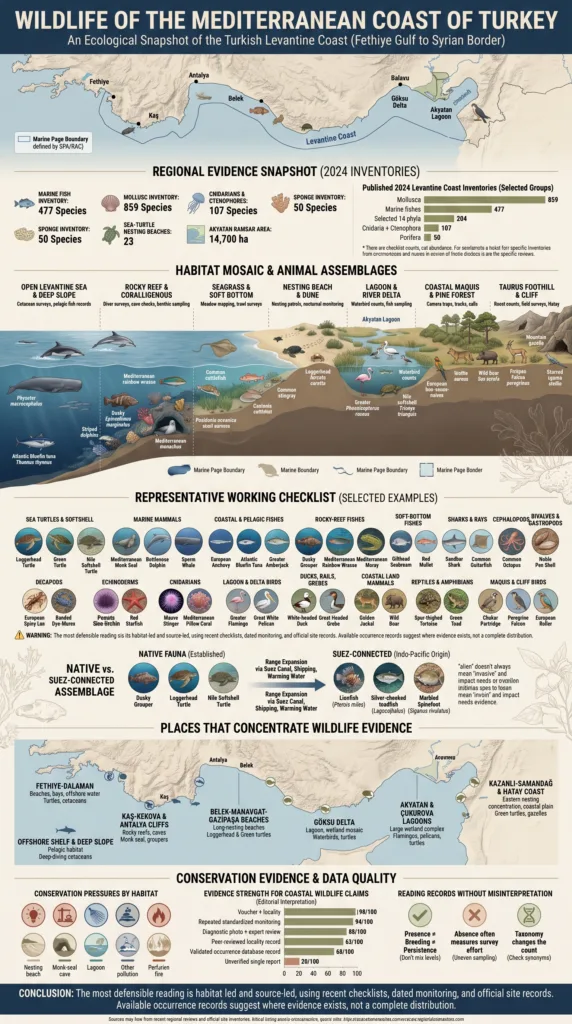
Wildlife along Turkey’s Mediterranean coast is organized by species, habitat, and regional occurrence across coastal and inland ecological settings.
Wildlife of the Mediterranean Coast of Turkey Read More »
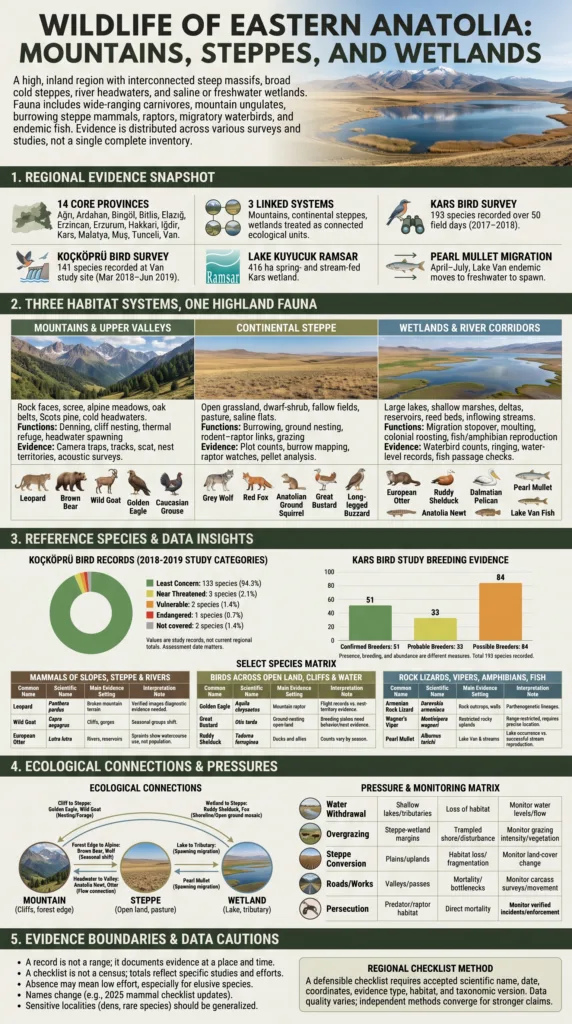
Eastern Anatolia’s wildlife is organized across mountains, steppes, and wetlands, linking regional species with their habitats.
Wildlife of Eastern Anatolia: Mountains, Steppes, and Wetlands Read More »
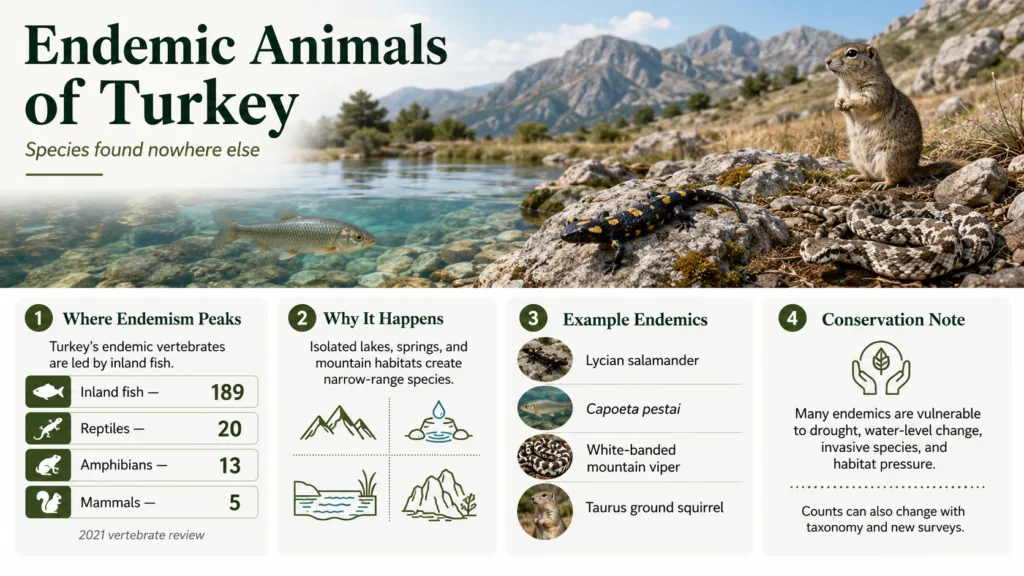
For Turkey’s endemic animals, the focus is species found nowhere else, linking limited distribution with the region named.
Endemic Animals of Turkey: Species Found Nowhere Else Read More »
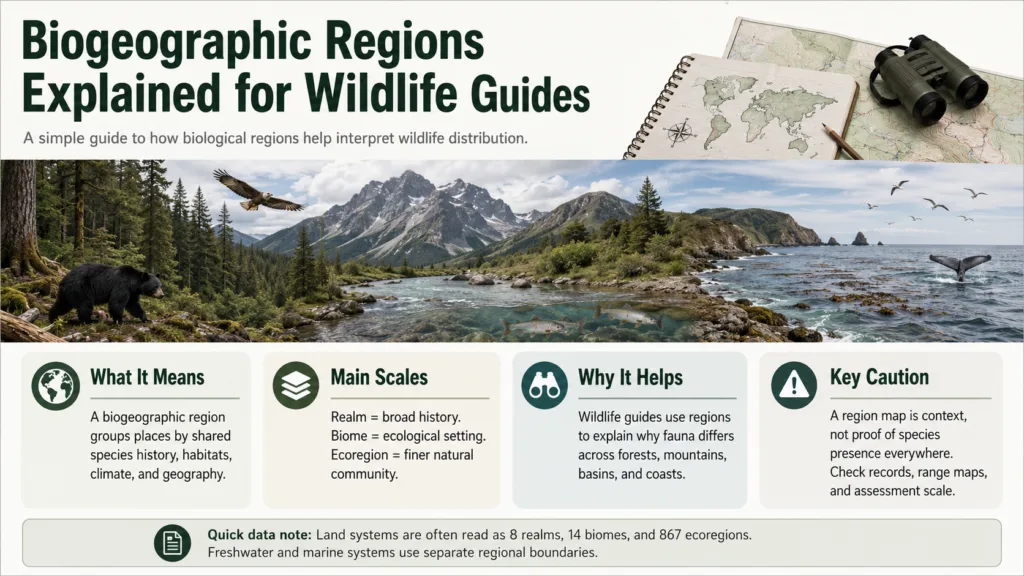
Biogeographic regions group wildlife by shared evolutionary and geographic history, helping regional guides explain animal distribution patterns.
Biogeographic Regions Explained for Wildlife Guides Read More »
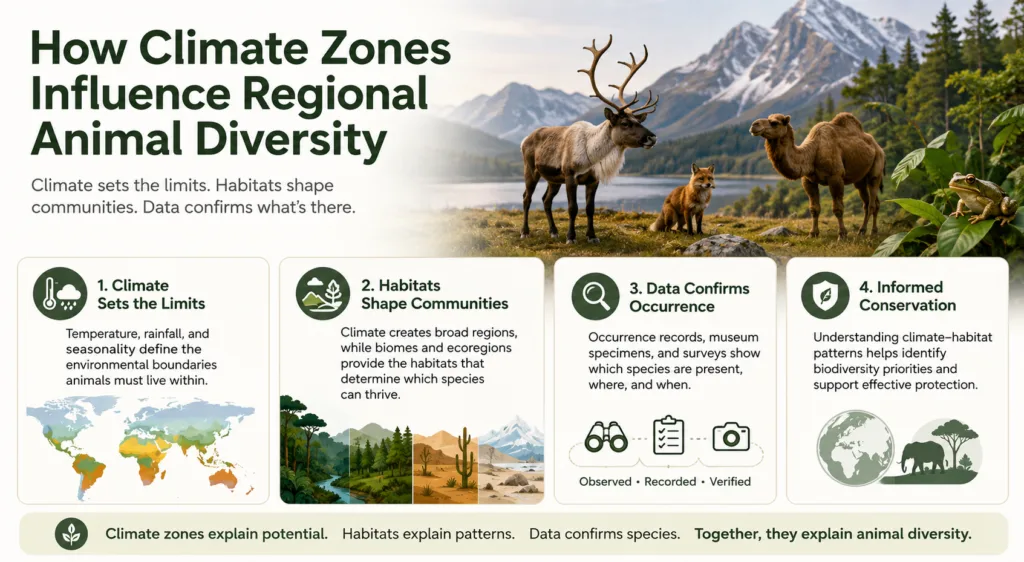
Climate zones influence regional animal diversity through temperature, rainfall, seasonality, vegetation, and the habitats available to different species.
How Climate Zones Influence Regional Animal Diversity Read More »
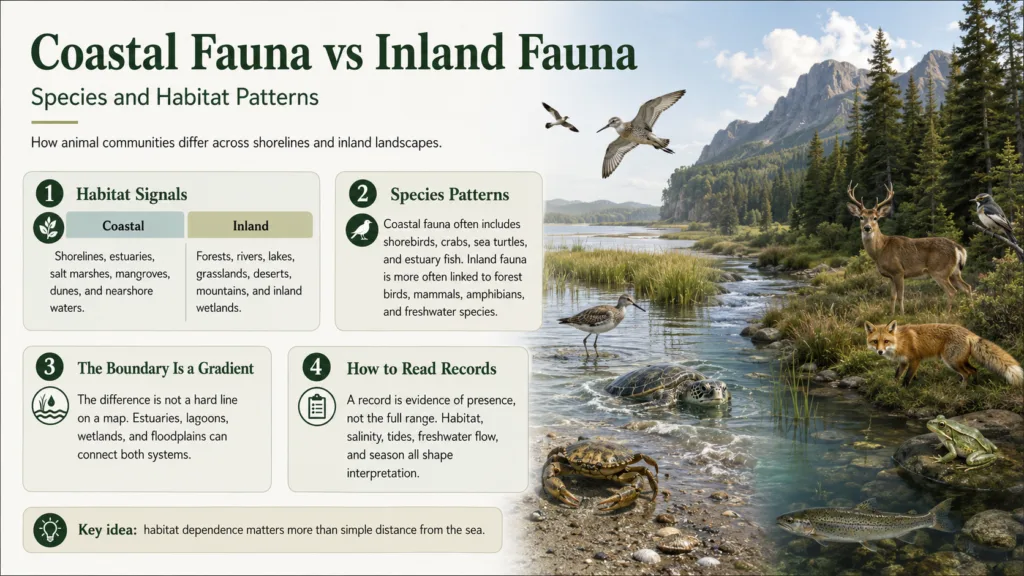
Coastal and inland fauna are compared through salinity, moisture, landforms, food webs, movement corridors, and habitat-specific animal groups.
Coastal Fauna vs Inland Fauna: Species and Habitat Patterns Read More »
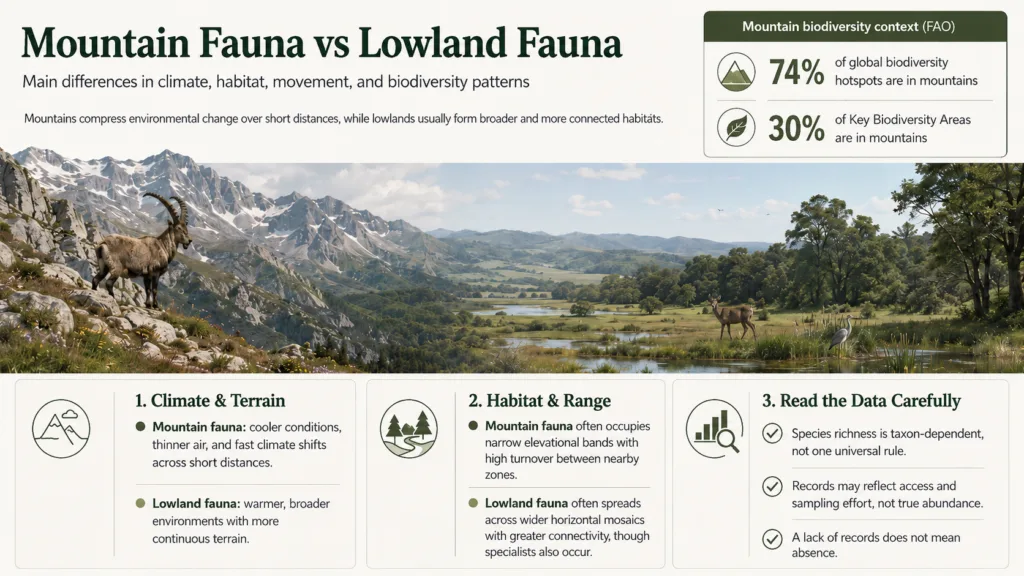
Mountain and lowland fauna differ in climate, elevation, habitat structure, seasonal conditions, and the species adapted to each environment.
Mountain Fauna vs Lowland Fauna: Main Differences Read More »
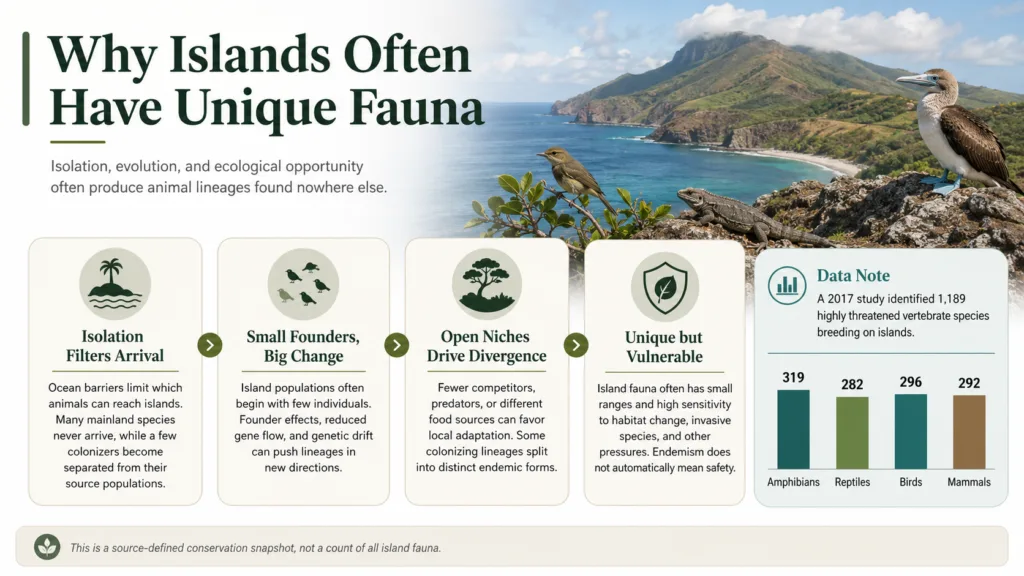
Island fauna is often distinctive because isolation limits colonization and encourages endemism, while introductions can alter native communities.
Why Islands Often Have Unique Fauna Read More »
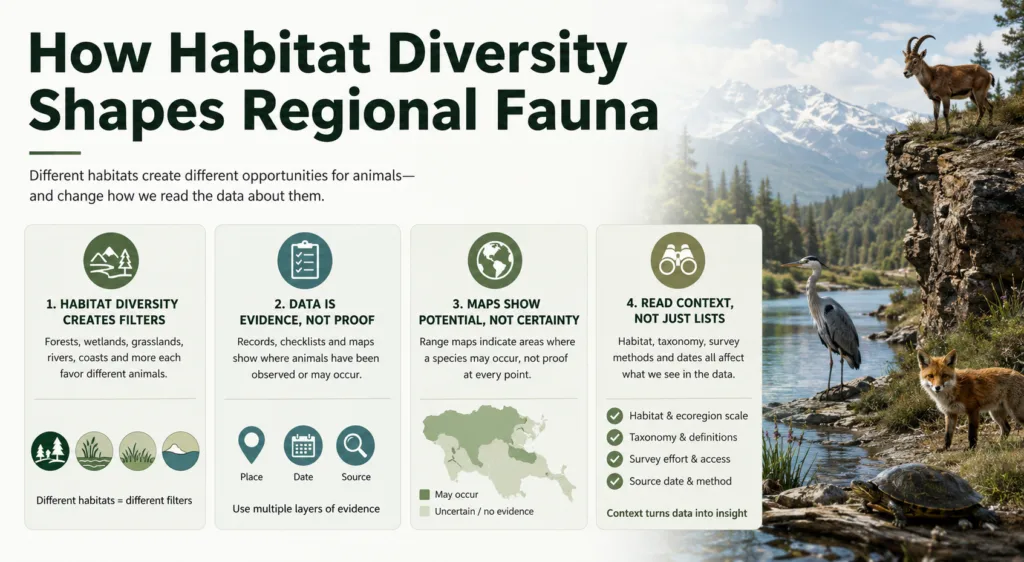
Habitat diversity shapes regional fauna by creating different ecological conditions for specialists, generalists, predators, prey, and seasonal species.
How Habitat Diversity Shapes Regional Fauna Read More »