Kenneth J. Almonte

Aquatic fauna, including freshwater and marine animals, displayed in a vibrant underwater scene with diverse fish and coral habitats.

Aquatic Fauna Explained: Freshwater and Marine Animal Life

Aquatic fauna is the animal life that depends on water for all or a defined part of its life cycle. It includes freshwater animals in rivers, lakes, wetlands and groundwater; marine animals in coastal waters, open oceans and the seafloor; animals of brackish estuaries; and species whose aquatic dependence is limited to feeding, breeding, migration […]

Aquatic Fauna Explained: Freshwater and Marine Animal Life Read More »

Terrestrial fauna and land animals' habitats illustrated in a natural landscape setting.

Terrestrial Fauna Explained: Land Animals and Their Habitats

Terrestrial fauna is the animal life that lives on land or depends on land for feeding, shelter, movement, reproduction, or part of its life cycle. It includes animals on the ground, in vegetation, beneath the soil, inside caves, on exposed rock, and in terrestrial airspace. The term describes ecological use rather than a single branch

Terrestrial Fauna Explained: Land Animals and Their Habitats Read More »

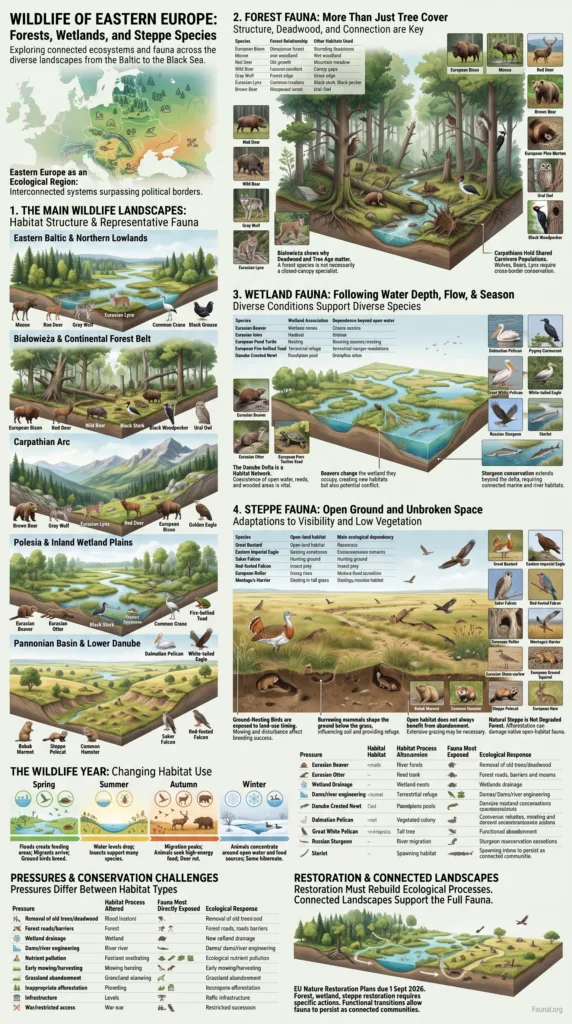
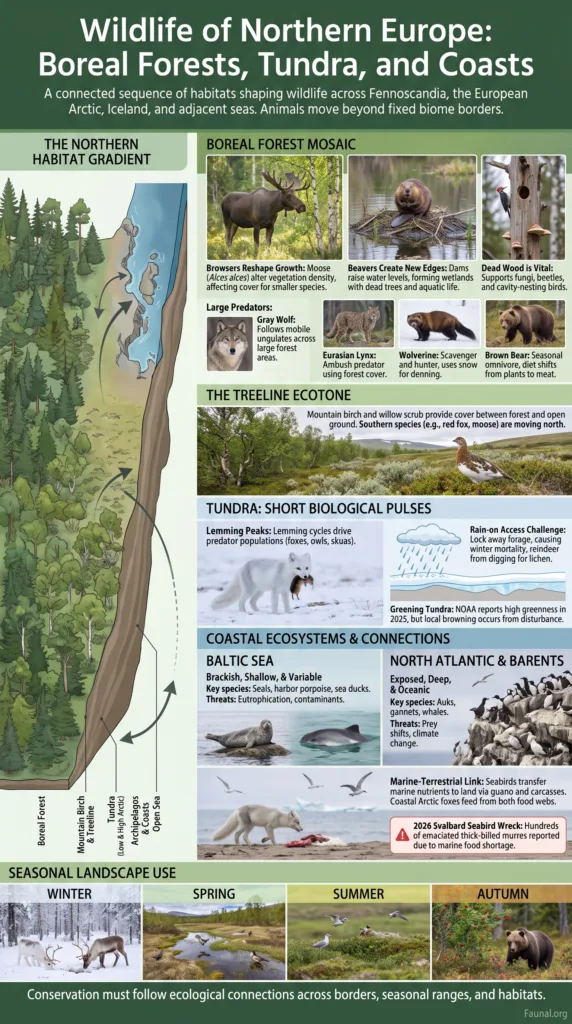
Regional fauna explained shows how animal life varies across different geographic areas and ecosystems.

Regional Fauna Explained: How Animal Life Changes by Geography

Regional fauna is the animal life associated with a defined geographic area. It changes from place to place because climate, elevation, water connections, habitat structure, physical barriers, evolutionary history, seasonal movement, and human transport determine which animals can reach a region, survive there, and maintain populations. The word “region” does not refer to one fixed

Regional Fauna Explained: How Animal Life Changes by Geography Read More »

Endemic fauna are animals unique to a specific region, like the lemur living only in Madagascar, showcasing unique biodiversity.

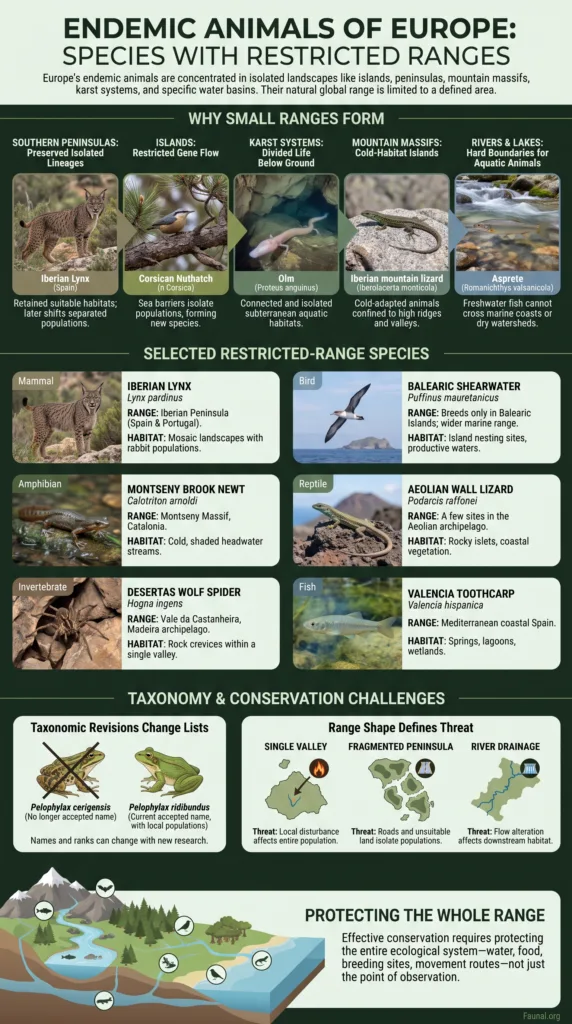
Endemic Fauna Explained: Why Some Animals Live Only in One Region

Endemic fauna are animal taxa whose natural global range is confined to a defined geographic area. That area may be a single cave, lake, island, archipelago, mountain system, watershed, country, or biogeographic region. Some endemic animals evolved after populations became isolated; others are surviving remnants of lineages that once occupied a wider range. Endemism Connects

Endemic Fauna Explained: Why Some Animals Live Only in One Region Read More »

Native fauna includes animals that naturally live in a specific region, such as kangaroos in Australia or bald eagles in North America.

Native Fauna Explained: Meaning and Examples

Native fauna is the animal life that occurs within its natural geographic range, including places it occupies now, occupied historically, or could reach through natural dispersal without direct or indirect human introduction. The term describes an animal’s geographic origin and relationship to a defined place; it does not describe how rare, threatened, abundant or ecologically

Native Fauna Explained: Meaning and Examples Read More »

Wildlife vs Fauna: Learn the main differences between these two terms related to animal life in nature.

Wildlife vs Fauna: What Is the Difference?

Wildlife and fauna overlap, but they are not interchangeable. Fauna is the collective animal life within a stated place, habitat, taxonomic scope, or period.[a] Wildlife usually refers to organisms understood as living wild rather than domesticated, although institutions may restrict the word to selected animal groups or extend it beyond animals.[b] A free-living fox in

Wildlife vs Fauna: What Is the Difference? Read More »

Fauna vs flora showcase key differences in biology, highlighting animal and plant life with visuals of animals, plants, and related symbols.

Fauna vs Flora: Key Differences in Biology

Fauna is the animal life associated with a particular place, habitat, geological period, or other defined scope. Flora is the corresponding plant life. A wetland’s frogs, fish, insects, mollusks, birds, and mammals form part of its fauna, while its reeds, sedges, mosses, shrubs, and trees form part of its flora. The Difference Is Which Organisms

Fauna vs Flora: Key Differences in Biology Read More »

Zebras and other animals illustrating the definition and examples of fauna in a scientific context.

What Is Fauna? Meaning, Examples, and Scientific Use

Fauna means the animal life associated with a defined place, environment, geological period, or other biological scope. The fauna of an island may include every animal group documented there, while terms such as bird fauna, cave fauna, freshwater fauna, or Pleistocene fauna describe narrower assemblages. Fauna is therefore a collective biological term, not the name

What Is Fauna? Meaning, Examples, and Scientific Use Read More »